At a glance
The private care home Le Petit Paradis (Wallonia, near Mons, Belgium) replaced its ageing Televic nurse call system with Healthcall in under six weeks, with no new cabling pulled and no wall damage. 118 residents are now equipped through wireless Bluetooth call buttons relayed by a Bluetooth Mesh network (gateways + anchors), combined with a full overhaul of the Wi-Fi 6/7 Ubiquiti network infrastructure. Decision made in early 2025 after six months of evaluation. Document drafted in May 2026, validated by the care home's management.
Context
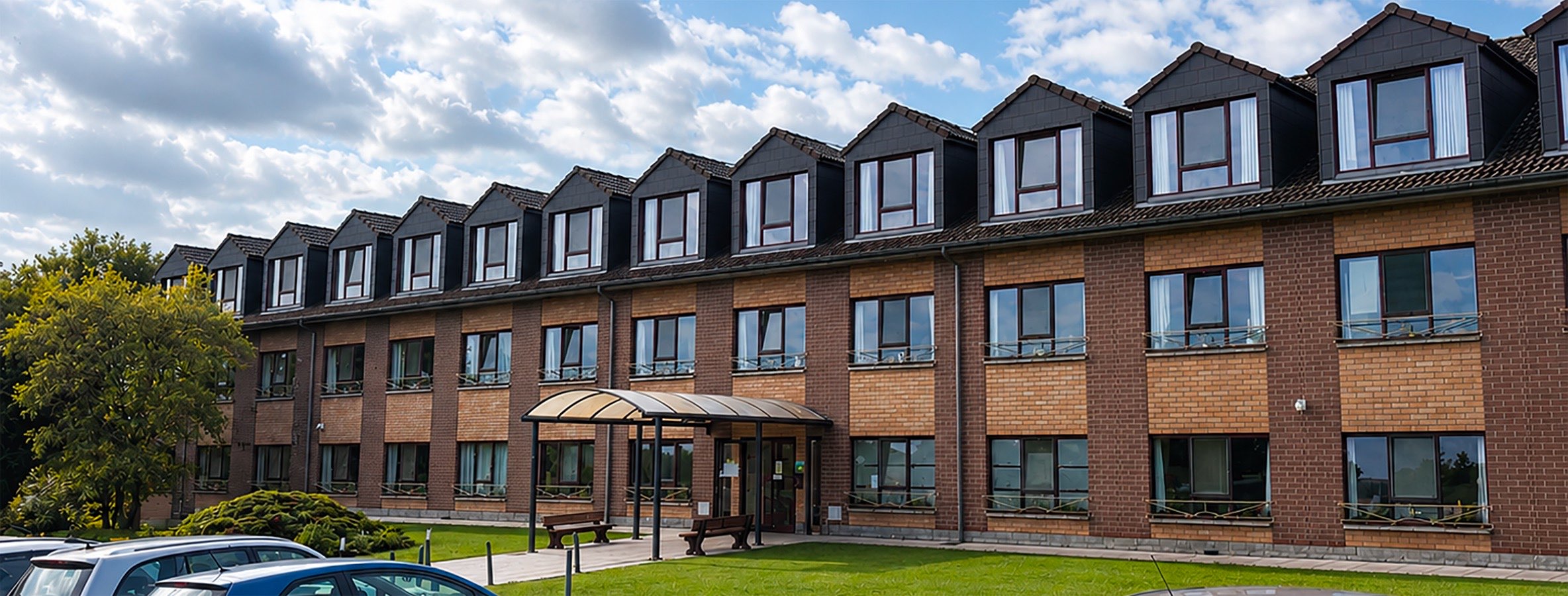
Le Petit Paradis is a private site located in Wallonia, near Mons. The care home houses 118 residents spread across 52 single rooms and 41 double rooms, and has 31 common areas in addition.
For nearly six months, the managers and the leadership team evaluated the replacement of their nurse call system. The decision was made in early 2025 to entrust the entire project to Groovit, the publisher of Healthcall.
-
118
Residents housed
-
93
Rooms
52 single + 41 double
-
31
Common areas
-
< 6 wk.
From order to first calls
The challenge: an end-of-life Televic system and reinforced walls
The Televic system in place for over 10 years was piling up issues. Several parts failed and became hard to source, as the supplier had discontinued the product line. Replacement parts and technical interventions were expensive, and response times slow. The solution was also rigid and could not evolve. The keypad screens installed at the entrance of the rooms had never been fully operational and required modifications that were never delivered. Another critical issue: the physical nurse call server was installed locally and ageing.
In parallel, management wanted to overhaul its wired and Wi-Fi network: any new solution would face performance problems without an upgraded infrastructure.
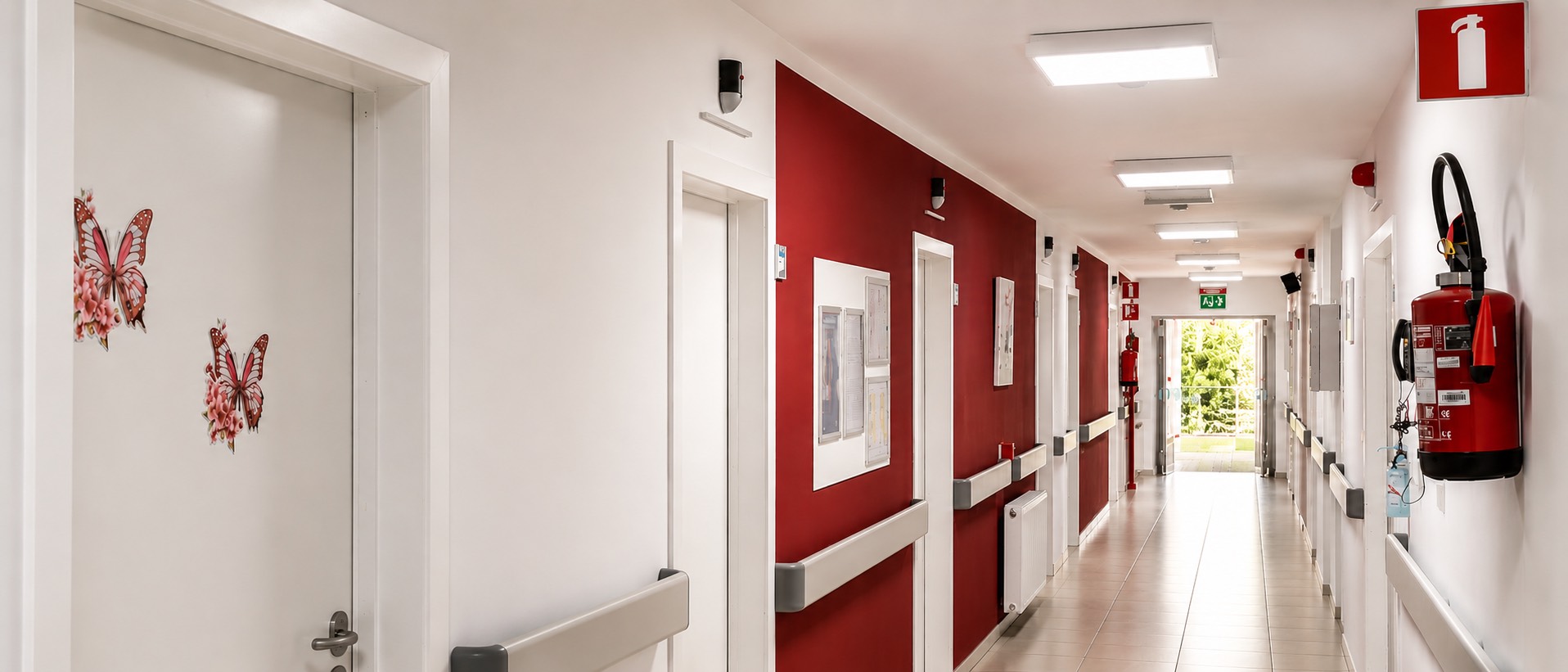
The Wi-Fi site surveys revealed a constraint management had not suspected. The load-bearing walls and corridor walls embed, every two rows of bricks, horizontal metal sheets that form a screen blocking radio waves. On top of that, an operational requirement: every 2 to 3 years, all interior walls are repainted and refreshed. So pulling new cabling or damaging the walls was out of the question.
The deployed Healthcall solution
After several demonstrations and full-scale on-site tests, Groovit and management settled on a fully wireless architecture built around Healthcall.
Wireless Bluetooth call buttons
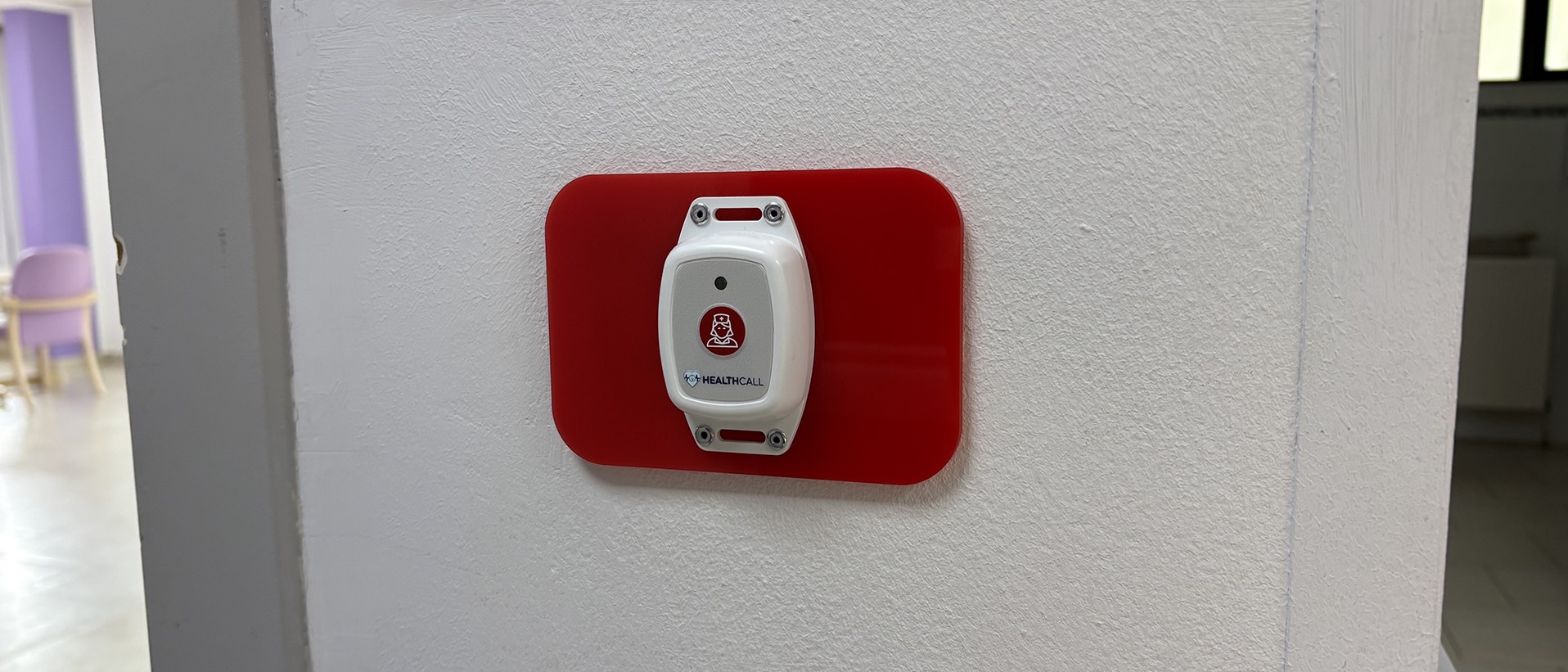
No cabling is pulled, neither for power nor for data communication. Some buttons are wall-mounted, others are mobile: worn as a pendant, held in hand, or attached to the bed with a long cord, like a classic pull cord.
Communications travel via a Bluetooth Mesh network made of gateways and anchors that handle mesh relaying between the buttons and the central system. This topology offsets the attenuation of the reinforced walls without requiring dedicated radio antennas in every room.
Finishing plates to hide the old holes
Beige or red acrylic plates cover the locations of the former Televic buttons, which were noticeably larger. No plastering or repainting was needed.
LED indicators in corridors and bedrooms
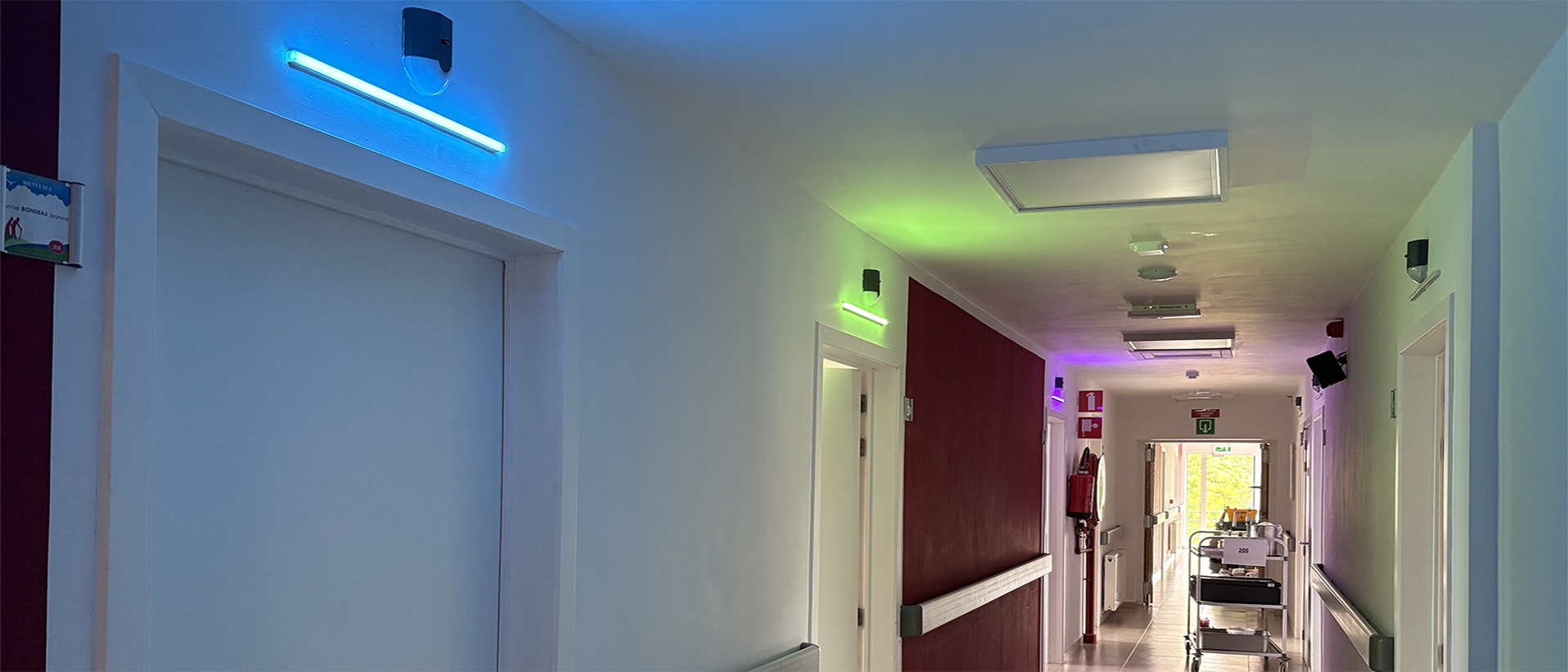
Every door is fitted, on the corridor side, with a 50 cm LED bar in 16 million colours. Inside the room, a smaller LED indicator of 25 cm is placed above the door to signal the call status and follow-up locally.
On-site demonstration during installation
The client runs a test after installing the first LED indicator himself. Outside the room, the corridor indicator lights up to signal the call. Once inside, the caregiver registers their presence: the colour shifts on both the in-room and the corridor indicators. The team keeps an instant read on every room's status without checking a terminal. A voice notification confirms the presence as well.
Footage captured by the care home in real conditions, during installation. A few installation cables are still visible.
Industrial smartphones for caregivers
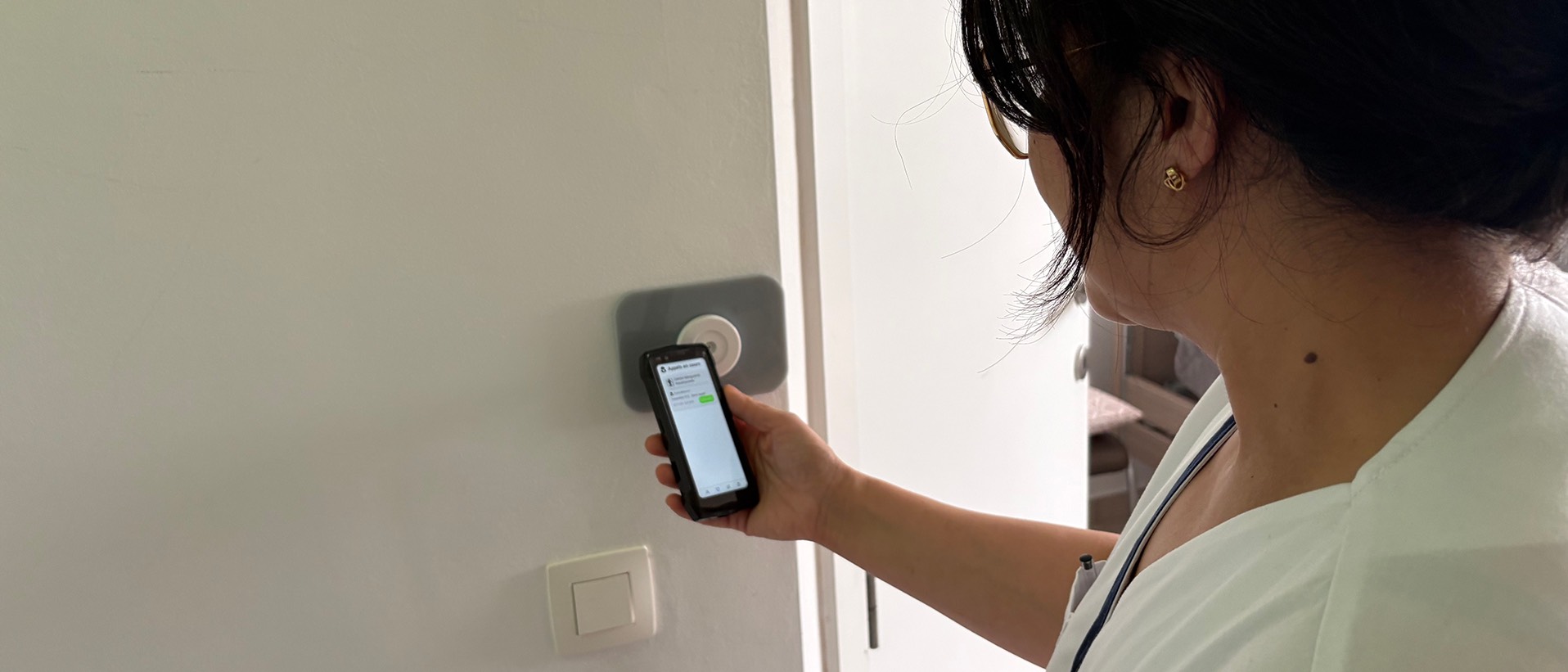
The teams use industrial smartphones in a small 4.5-inch format, on Wi-Fi. The system is fully voice-driven: call information is delivered through the speaker, and caregivers can dictate actions, call reasons and comments. The same smartphones read the NFC tags placed at the entrance of the rooms and embedded in the residents' buttons for in-room presence management: a simple and cost-efficient alternative to badge readers in every room.
Network infrastructure overhaul
20 Wi-Fi 6 and Wi-Fi 7 "long range" Ubiquiti access points were deployed, along with 7 switches. The 12 existing Ubiquiti cameras were taken over and integrated into the new networks designed for the project.
-
20
Wi-Fi 6/7 long-range APs
Ubiquiti
-
7
Switches
-
12
Integrated cameras
existing hardware reused
Deployment
Six steps, under six weeks
- Step 1
Workshop pre-configuration
Gateways, anchors and buttons configured upfront. All features and rules parameterised before arrival on site.
- Step 2
Wi-Fi survey and Bluetooth antennas
Groovit places the Gateway antennas and the Bluetooth Mesh anchors to offset the attenuation of the reinforced walls.
- Step 3
Installation by the technical service
The care home's own technical team installs the buttons and LED indicators. No specialist subcontracting required.
- Step 4
Progressive cutover
Commissioning wing by wing, service by service, room by room. No pressure, no disruption for residents.
- Step 5
Central supervision in the nurses' station
A TV in the care room displays in real time the ongoing calls and the in-room presences.
- Step 6
First resident calls
Less than six weeks after the order, the first calls go live across all equipped wings.
What the teams appreciate
Two daily uses come back in feedback from the care staff:
- Central supervision in the care room. A TV in the nurses' station continuously shows ongoing calls and in-room presences. The team keeps a full overview without having to query a terminal.
- Care follow-up integrated with the nurse call. Certain care items are not available in the existing care management software. They are entered in Healthcall, tracked, traced and closed like any intervention. Day and night rounds are created and tracked in the same place.
On the resident and caregiver side, the voice-driven use of the industrial smartphone (audio playback of information, dictation of actions and comments) makes repetitive tasks easier without overloading the screen.
Why Le Petit Paradis chose Groovit
Four reasons stand out from the discussions with management:
- Technical competence and domain knowledge built trust from the very first exchanges.
- The wireless architecture did not question the existing cabling and remained compatible with the wall-refresh policy every 2 to 3 years.
- The software's features, easy to pick up, drove rapid adoption by the care staff.
- Groovit's multidisciplinary skills (nurse call, IT networks, IP telephony soon to be replaced, camera management) positioned the publisher as an integration partner able to support current and future technical projects, not a mere supplier.
Management speaks
A few questions put to the managing director of Le Petit Paradis care home.
Why did you choose Groovit as the partner for your new nurse call system?
We chose Groovit as the partner for our new nurse call system above all because of the trust built up through our collaboration. What particularly convinced us is the team's full mastery of the solution, both commercially and technically. That deep expertise enables clear, efficient exchanges directly oriented to our needs. Groovit understood the specifics of our facility and proposed a genuinely tailor-made solution rather than a standardised one.
Why did you decide to change systems?
We changed systems because the previous one was becoming dated. Its maintenance was increasingly complicated and costly, which was a significant day-to-day burden. The system was also less intuitive and more complex to use for the teams. We therefore wanted to move to a more modern solution, simpler to use and better suited to our current needs.
What do you take away from this experience with Groovit, and what recommendations would you make?
We take away a very positive experience with Groovit. The project was built in genuine collaboration, with attentive listening to our needs and concrete consideration of feedback from the teams on the ground. This collaborative approach made it possible to put in place a solution adapted to our daily operations and that truly answered our expectations. We recommend Groovit for their listening, their closeness, and their ability to propose a tailor-made solution.
What advice would you give to other care homes planning to equip themselves or to replace an existing nurse call system?
I would advise them to trust professionals capable of understanding the real needs of the care home. Every facility has its own operations, constraints, and priorities. It is therefore important to choose a partner who fully masters the technical side but also knows how to tailor each project. A tailor-made solution makes it possible to better answer the teams' expectations and to ensure simpler and more efficient day-to-day use.
Factual recap
- Who: private care home Le Petit Paradis, 118 residents
- Where: Wallonia, near Mons (Belgium)
- What: replacement of the Televic system + full network infrastructure overhaul
- When: decision in early 2025, rollout in under six weeks, document validated in May 2026
- How: fully wireless Healthcall architecture on Bluetooth Mesh (gateways + anchors), wireless buttons fixed and mobile, 4.5-inch industrial smartphones with NFC reading
- Why: Televic parts running out, product line discontinued by the supplier, ageing physical server, reinforced walls with metal sheets, wall repainting every 2-3 years
- Network: 20 Wi-Fi 6/7 "long range" Ubiquiti APs, 7 switches, 12 Ubiquiti cameras reused and integrated
- Installation: workshop pre-configuration, installation by the care home's own technical service, no specialist subcontracting
- Cutover: wing by wing, service by service, room by room, with no interruption of care
Healthcall modules involved
- Nurse call: wireless Bluetooth buttons, LED indicators in corridors and rooms, NFC presence.
- Central supervision: TV in the care room, live calls and in-room presences in real time.
- Scheduled care: follow-up, traceability and closure of care items, creation of day and night rounds.
- Carer phone: 4.5-inch industrial smartphone, voice playback of calls, dictation of comments.